Speaking & Professional Development
Book Lauren to speak at your next event.
As a seasoned expert in the Science of Reading and Orton-Gillingham, Lauren delivers dynamic presentations crafted for those wanting to learn about and implement the components of an Orton-Gillingham lesson in individual, small group, and classroom settings. Expect innovative strategies, engaging materials, and evidence-based methods.
Find what you need
Professional development for all organizations
Schools
Whole-staff and grade-level professional development for districts, public schools, and language-based learning programs.
Private Practices
Hands-on training for SLP groups and private practices ready to integrate literacy into everyday sessions.
Consultations
One-on-one or small-group consultations to support clinicians building structured literacy into their caseloads.
Learn about consultation →Kind words
What attendees say
My speech friends know that school-based professional development days can be painful. Our director is always great about wanting these days be applicable to our job but today she went above and beyond. We were blessed to have Lauren Kline speak to us today. She was AMAZING! What gift to spend the morning talking about speech and literacy with one of the best!
I loved Lauren's session about literacy and felt that it was very helpful for those who don't treat dyslexia. I learned some helpful treatment examples and tips.
Presentation Topics
What Lauren can speak on
Integrating Literacy into Speech Sound Disorders Therapy
6 hoursSpeech sound disorders can significantly impact a child's ability to read and spell, yet SLPs often address speech and literacy as separate domains—missing critical opportunities to strengthen both within the same session. This 6-hour course equips SLPs with practical tools to integrate structured literacy into speech sound disorder therapy. Grounded in the Science of Reading, participants will learn to assess literacy risk, target phonological awareness and phoneme-grapheme correspondences alongside speech goals, and plan sessions that address both spoken and written language. The course balances lecture with hands-on activities, video demonstrations of real sessions, and collaborative planning time.
See full outlineThe SLP's Guide to Reading Multisyllabic Words
3 hours or 1.5 hoursBig words are where a lot of readers fall apart. A student who decodes single-syllable words with confidence hits a wall at "fantastic" or "consideration," and the strategies that worked before stop working. The fix isn't more sounding out — it's teaching students how words are built. This course gives you the structural backbone for reading multisyllabic words: syllable types and syllable division, plus the morphology that supports them. You'll leave able to teach multisyllabic reading with clarity and a plan, whether you're working in a therapy session or a structured literacy lesson.
See full outlineThe SLP's Guide to Structured Literacy Lesson Planning
3 hours or 1.5 hoursYou know what a structured literacy lesson should include — you can name the components, you understand the research, and you believe in the work. The hard part is what happens when the timer starts: the session is short, the caseload is full, and somewhere between the warm-up and the wrap-up, half of what you planned gets squeezed out. This course is built for the realities you actually work in, whether that's a therapy session or a structured literacy lesson — short blocks of time, mixed groups, and students who bring a speech sound disorder and a reading difference to the same table. Instead of a script, you'll learn to think like a planner, leaving with a repeatable framework, a clear sense of what to keep and what to cut when time runs short, and the confidence that comes from knowing your lessons are intentional rather than improvised.
See full outlineThe SLP's Guide to Building Better Word Lists
3 hours or 1.5 hoursThe word list is the quietest decision you make, and one of the most important. The words you put in front of a student shape what they can practice, what transfers, and whether a lesson moves a goal or just fills the time — yet most of us were never taught how to build one on purpose. This course teaches the framework, not the finished list: instead of handing you words to use on Monday, it makes you the person who can build the right list for any student, any goal, and any setting. Working from the intersection of speech and literacy, you'll leave able to construct word lists that are developmentally sound, sequenced with intention, and matched to the student in front of you.
See full outlineLooking for something else? Lauren is happy to design custom sessions tailored to your audience. Reach out.
Where you can find Lauren
Speaking schedule
SHAA
UpcomingCompletedBirmingham, AL
- → The Unseen Overlap: Reading Risk in Children with Speech Sound Disorders
- → Word Chaining, Onset-Rime, and the Bridge from Speech to Reading
- → The Alabama Literacy Act and the School-Based SLP — Where You Fit
IDA Annual Reading, Literacy & Learning Conference
UpcomingCompletedLas Vegas, NV
- → Dyslexia & Speech Sounds: How SLPs Can Lead Literacy Intervention
North Coastal Consortium for Special Education
UpcomingCompletedCalifornia
- → Layered Learning: How Smart Word Lists Support Speech and Literacy Growth
North Coastal Consortium for Special Education
UpcomingCompletedCalifornia
- → In-Depth Look at Lesson Planning: Marrying Literacy & Speech Sound Disorders
Pueblo County School District 70
UpcomingCompletedPueblo, CO
- → In-Depth Look at Lesson Planning: Marrying Literacy & Speech Sound Disorders
AbleNet Presentation
UpcomingCompletedVirtual
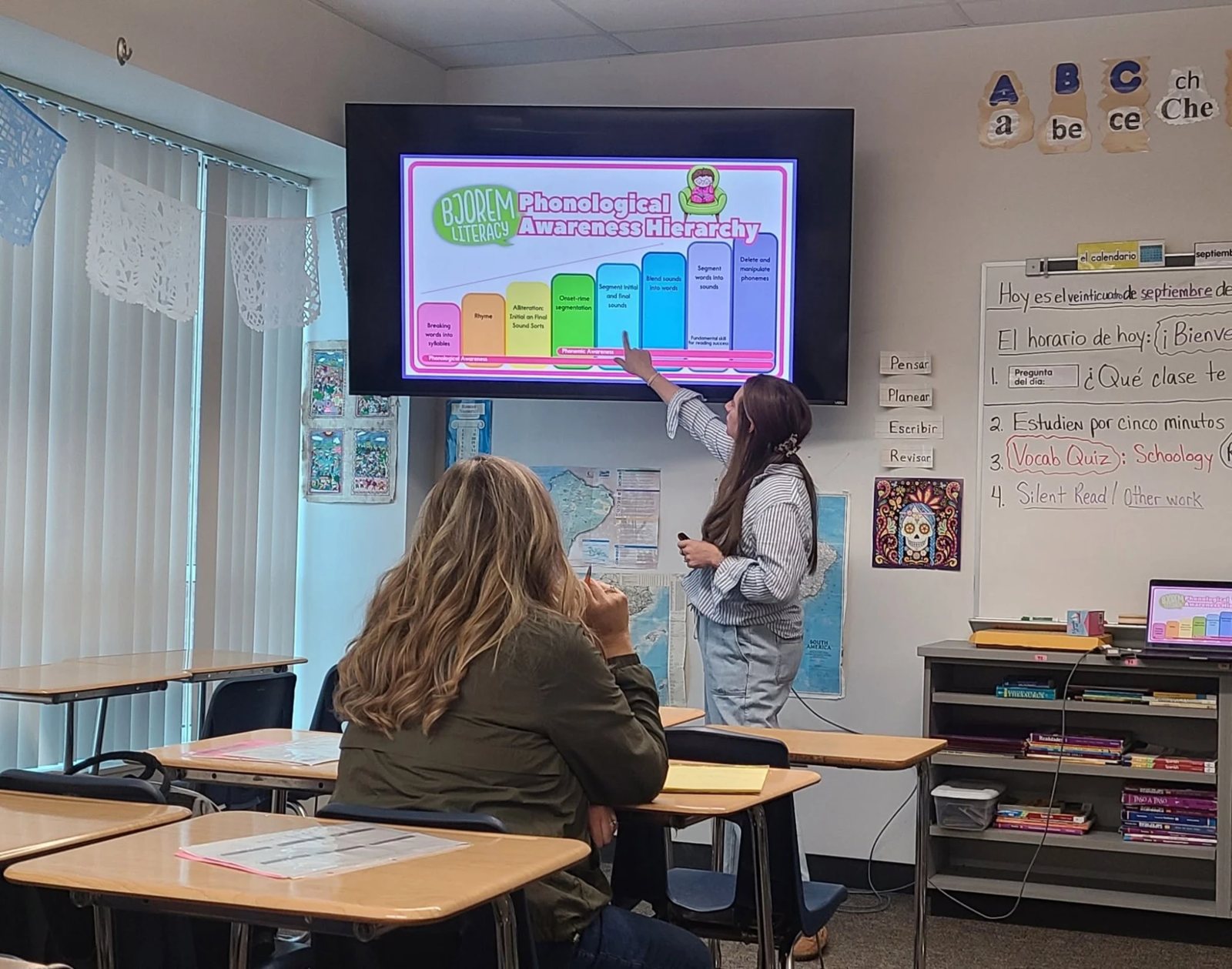
- → Building Literacy Skills: Targeting Phonemic Awareness in Speech Therapy
Limestone County Schools
UpcomingCompletedAlabama
San Juan Unified School District
UpcomingCompletedVirtual
Building Readers for Life Conference
UpcomingCompletedThe Literacy Nest — Virtual
- → What Struggling Spellers Are Missing: The Case for Explicit Short Vowel Instruction
Oceanside Unified School District
UpcomingCompletedOceanside, CA
- → Better Letters: 3-Hour Comprehensive Training (3 hours)
Orton-Gillingham Academy Conference
UpcomingCompletedNorfolk, VA
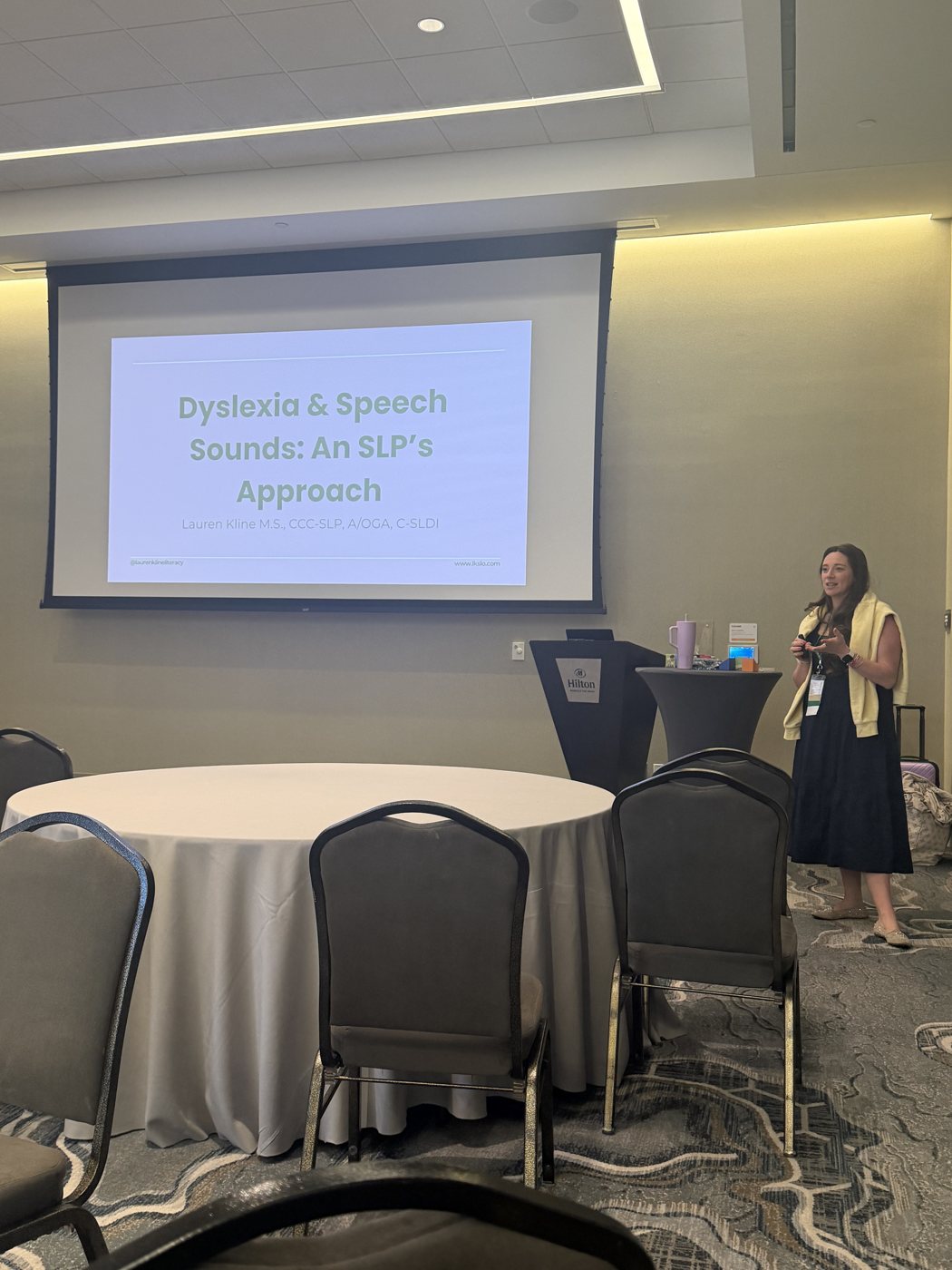
- → Dyslexia and Speech Sounds: An SLP's Approach (1.5 hours)
SHAA
UpcomingCompletedBirmingham, AL
Metro Speech and Language Symposium
UpcomingCompletedDenver, CO
SLP Summit
UpcomingCompletedVirtual
- → From Sounds to Sentences: Bridging Speech and Literacy in Everyday Sessions (1 hour)
Jeddah Institute for Speech and Hearing
UpcomingCompletedJeddah, Saudi Arabia
- → Integrating Literacy into Childhood Apraxia of Speech Therapy (3 hours)
IDA-RMB Reading in the Rockies Conference
UpcomingCompletedColorado Springs, CO
Bjorem Speech Publications Cruise
UpcomingCompletedCaribbean
- → Dipping Your Toe(s) Into the World of Literacy
FLASHA Convention
UpcomingCompletedOrlando, FL
Features & Publications
Press, podcasts & research
Media & Podcasts
- Speechie Side Up Podcast — "Read Between the Lines: Understanding and Treating Dyslexia"
- QuickTalker FreeStyle SLP Spotlight — SLP Spotlight: Lauren Kline, M.S., CCC-SLP, A/OGA
Research & Honors
- Kan PF, Sadagopan N, Janich L, Andrade M. Effects of speech practice on fast mapping in monolingual and bilingual speakers. J Speech Lang Hear Res. 2014;57(3):929-41.
- University of Colorado–Boulder Undergraduate Honors Thesis: The Effects of Word Form Rehearsal and Language Experience on Fast Mapping in Young Bilingual Adults.
- University of Colorado–Boulder Summer 2011 Undergraduate Research Opportunity Program (UROP) Grant Recipient
- MGH Institute of Health Professions — John Hilton Knowles Fellows Scholarship Recipient
Reach out
Ready to bring Lauren to your next event?
Whether it's a single session, a full-day workshop, or a custom topic for your team — let's talk about what would work best for your audience.
Inquire About Booking